Amy Sherman's "Agents of Flourishing" Answers the Church's Post-2020 Question, "What do we do now?"
Justice Year
Since the covid-19 pandemic and racial justice protests of 2020, many Christian thinkers have stepped up to critique the church and call us higher, to more love and justice. Most of these books have a shoot from the hip feel as if they were rushed out the door to answer pressing questions about race, politics, and justice.
In contrast, Amy L. Sherman’s “Agents of Flourishing” is the most comprehensive and theologically grounded book I’ve read on the topic of how God’s people should faithfully engage with society. Instead of pulling together a pattern of “do justice” or “good works” scriptures, Sherman appeals to the full sweep of God’s story in the Bible to call us forward. And though she has a few chapters on justice, she spends equal time on 5 other areas where a church can apply its gifts to serve its neighbors.
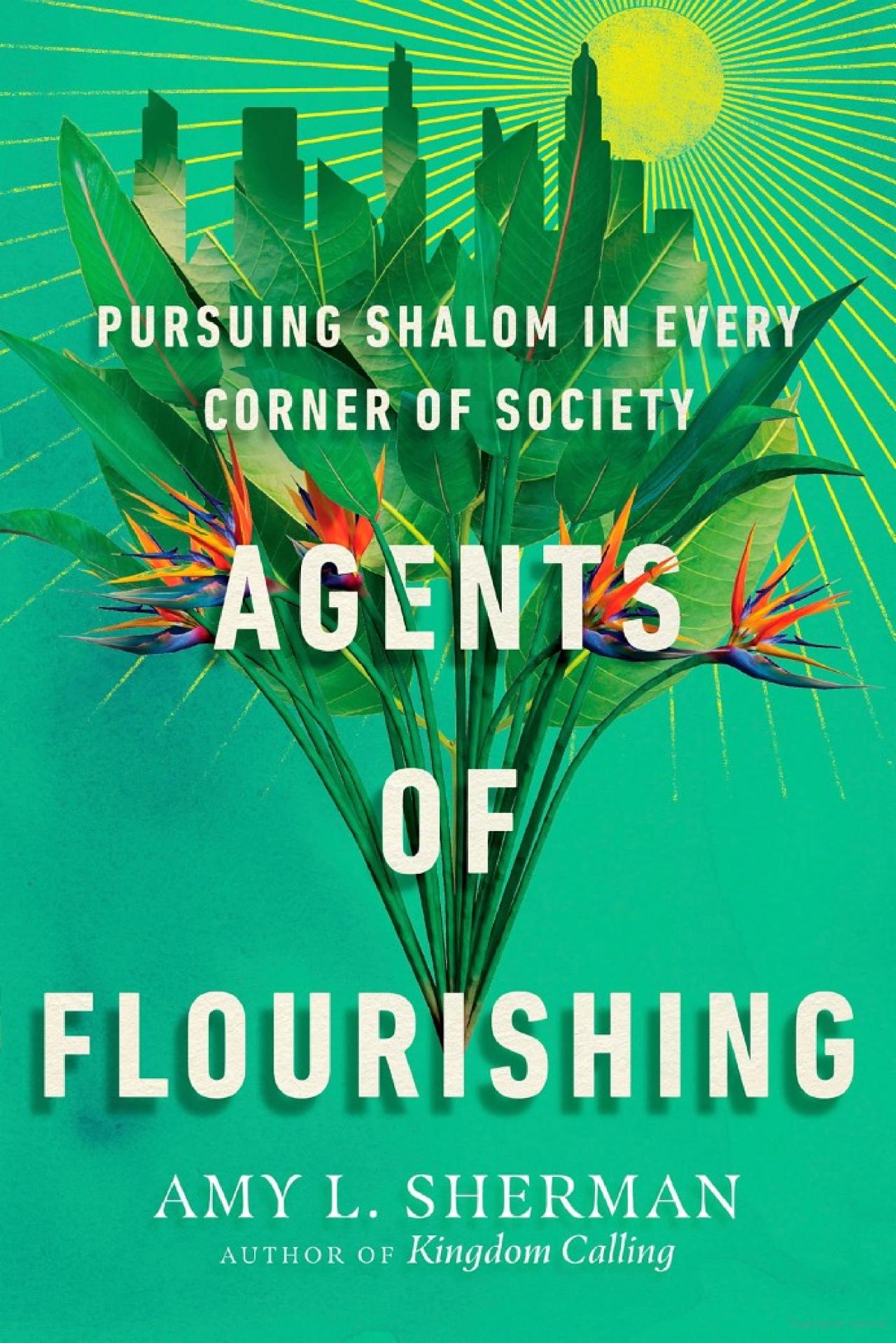
Sherman looks at the current way most churches engage their cities and points to a different, forgotten path. “We have the opportunity today to recapture the best of our past missional action”, Sherman exhorts. “We can reject both a chaplain-to-the-culture accommodationism and an ugly, dominate-the-culture approach that lusts for political power. We can instead embrace our identity as strangers in this world who - in ways that are bewilderingly attractive to nonbelivers - honor our King through holy lives of wise, sacrificial love.”
This different way is not a middle path or new innovation. Instead, Sherman argues that we need to embrace the original Christian calling to be proactive “royal priests” seeking the flourishing or “shalom” of our cities. And if you look close enough, you’ll find examples of this love for neighbor in our history and even with some churches currently.
Every book is written from the social location of the author, and that can both make the book incisive for its audience and cause blind spots. “Agents of Flourishing” is no exception. Sherman breaks down her approach with numbered frameworks and invites her readers to skip around and take what they need. She likely knows that church leaders are overwhelmed and need a handy guide more than an inspiring manifesto.
(Listen to an interview with Amy Sherman on the Faith & Work podcast - iTunes and website)
But Sherman has two blindspots. First the book doesn’t present the reader with the theology or reality of suffering on behalf of Christ and your neighbor, which is part of the vocation of being a royal priest. Many churches avoid the potential persecution that comes with being an agent of flourishing and choose social impact programs that are as inoffensive as possible. Sherman celebrates how her suggestions will make the gospel more attractive, without also presenting how to handle the other end of the stick - the powers and authorities who profit from human suffering won’t let go of their meal ticket without a fight.
Sherman’s other unfortunate omission is how Christians should navigate our use of government power. In the United States, we citizens have the power and responsibility to vote, and we can advocate on behalf of ourselves and our neighbors in the form of free speech and assembly, like letter-writing or protests. Sherman seems to favor an approach that works outside of government with a focus on direct church action. For example, in chapter 10 Sherman highlights White Christians who moved into a poor neighborhood to serve the citizens there, even though earlier in the book she notes that government action caused the division and poverty. Faithful direction on how to use our privilege as citizens in a powerful nation would have made “Agents of Flourishing” a stronger book.
I high recommend Amy L Sherman’s “Agents of Flourishing” for any Christian who wants to start serving their community as an individual or together with their church. It a theologically sound, wide-ranging book, with many inspirational stories and practical advice.