How to Be a True Ally (3 White Men to Model)
A key part of doing justice the way Jesus did is to advocate and intercede for your neighbors. Even the neighbors who do not look or live like you.
The following 3 White men are new heroes of mine because during American slavery, the Civil War, and Reconstruction they risked their lives and livelihoods to bring freedom to people who did not look like them, but did look like me.
Their careers in justice pushes me to take notice of the unnoticed in my own community and reach out with friendship, service, respect, and advocacy. I hope that reading about their work and their personal theology will inspire you the same way.
The Outsider - William Lloyd Garrison
How can you be an ally to your neighbors when you are not responsible for their suffering, and have no official power to stop it? William Lloyd Garrison was a political outsider, but he decided that it was his duty as a Christian to fight for the end of slavery.
Garrison was known for platforming Black people to tell their own stories. He was the first to hire Fredrick Douglass as an abolitionist speaker, and Harriet Tubman said Garrison gave her the nickname "Moses".
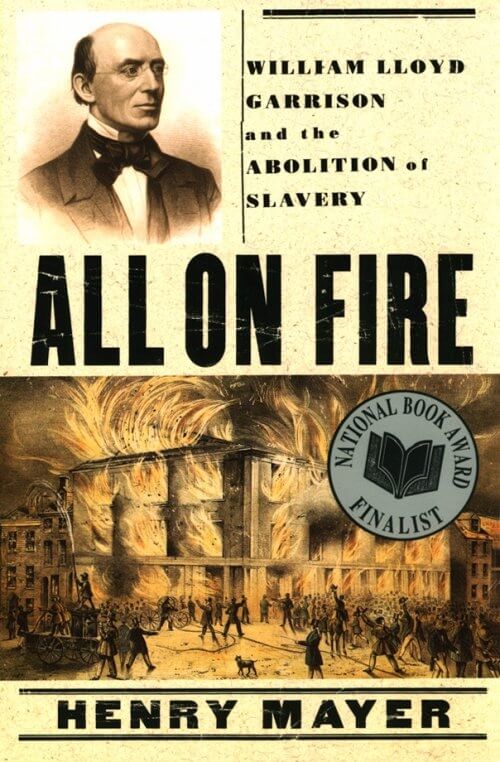
I appreciate Henry Mayer's book because he takes Garrison's faith seriously, instead of seeing the man as just a social reformer who used the Bible. Mayer writes:
"At the outset I thought it would be accurate to say that Garrison had 'secularized' the religious impulse and made it serve political ends, but I now think that is an inadequate and perhaps condescending formula. Garrison and his colleagues were believers who challenged the institutional church and evolved a creed of their own, but who never lost their faith in the redemptive power of Jesus Christ."
That makes "All on Fire" a good study for any disciple of Jesus who wants to understand Christian thinking during the slavery period that refused to compromise with the status quo.
The Insider - Albion Tourgée
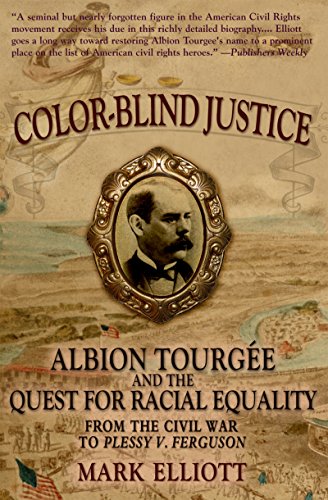
How can someone who works within a corrupt system be an ally to the people who are crushed by that system? Albion Tourgée's life gives us a blueprint.
Fighting in the Union army during the Civil War brought Tourgée face-to-face with the horrors of slavery and caused him to dedicate his life toward justice for Black folks. After the war he led his wife and some friends to Greensboro (my home city) to help with Reconstruction to and to provide protection to the newly freed Black population as they built their lives.
As a judge he didn't allow racial slurs in his courtroom, and he fairly sentenced KKK members who participated in racial violence. As a father he adopted Black children and sent them to historically Black colleges. As a neighbor, he helped to purchase land and homes in Greensboro for Black people. As a politically connected citizen, he advocated on behalf of Black people to the president. And as a Christian, he pushed his denomination to embrace what was called at the time the Social Gospel, which meant a focus on helping the poor and marginalized.
Albion Tourgée is most famous for arguing for equal rights before the Supreme Court in the Plessy v. Ferguson case, and coining the phrase "color-blind justice". He lost that case, but the infamous decision has since served to openly mark just how rotten and racist America still was, even up to the Supreme Court.
Actually, the most inspiring fact about Tourgée is that he lost more than he won. Despite his best efforts, the progress of Reconstruction was short lived, the South slid into every increasing terrorism against Blacks, and Tourgée labeled his own work "A Fool's Errand" and wrote a book with that title.
Decades past his death, after a lot more blood and prayers, the vision Tourgée had would come true. And now his actions and words exist as a prophetic witness to Christians who are part of crooked institutions but want to be part of the solution, even if the cause seems hopeless.
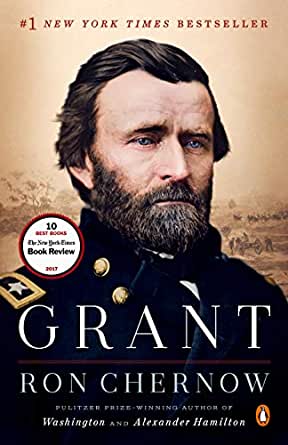
The Commander - Ulysses S. Grant
Ulysses Grant is a great case study for how to be an ally when you are the decision maker. As a general, Grant defeated the rebel Confederate Army, captured cities in the slave South, and emancipated enslaved people before Lincoln's Emancipation Proclamation.
But Grant went beyond freedom. He set former slaves up to do work and earn money for themselves, creating a market for their goods and keeping and dispersing funds so the entire community could eat and clothe themselves.
As president Grant pursued the KKK with zeal, despite warnings from both political parties that he was going too far and trampling on states' rights.
Grant came to faith later in his life, but his actions before he gave his life to Jesus can be modeled by any Christian who has the authority to correct unjust systems.